Freelancer Taxes in Israel · The Complete Guide to Calculating and Paying Right
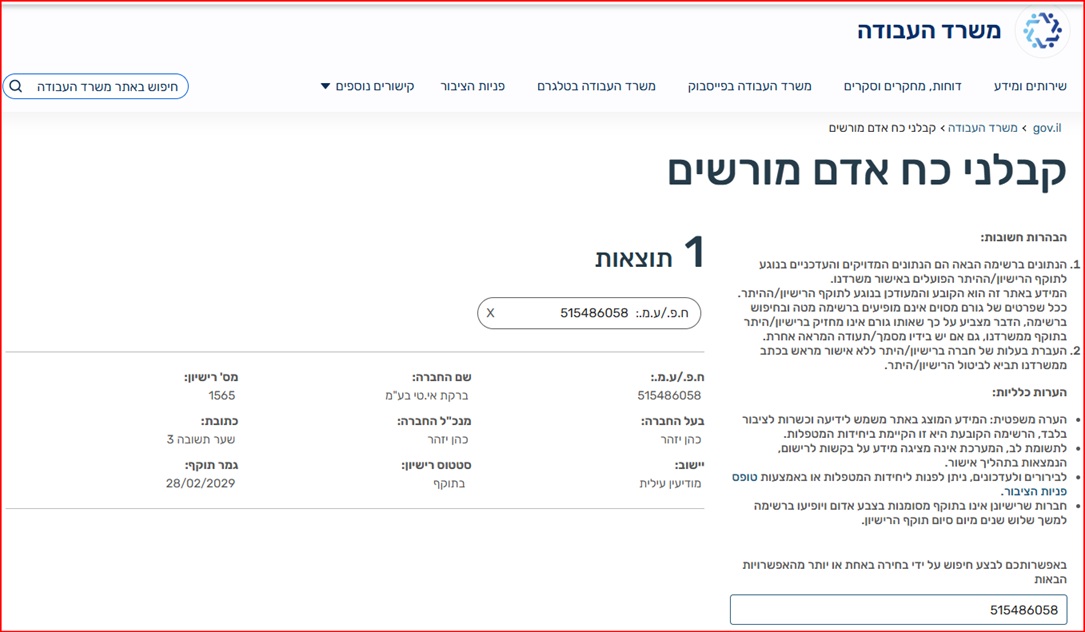
How much tax a freelancer pays in Israel, how income tax, VAT and Bituach Leumi are calculated, and when osek patur beats osek morshe. And how you can get paid and issue an invoice without opening a business and without bookkeeping · through NETO, a licensed manpower contractor under license 1565.
AI summary · Freelancer taxes in IsraelClick to read the page summary
In Israel, a freelancer is a self-employed worker in every respect, liable for three main payments: income tax on the profit (according to progressive brackets), VAT (mainly for an osek morshe) and Bituach Leumi. An osek patur suits an annual turnover of up to about 122,833 ILS and does not charge VAT, while an osek morshe charges VAT and may offset it. Deductible expenses reduce taxable income, and it is recommended to set aside 30%-40% of the profit for taxes. Anyone who does not want to open a business and manage filings can get paid and issue a lawful tax invoice-receipt through NETO · a licensed manpower contractor under license 1565 · for a commission of about 5% of the invoice, with no bookkeeping and no VAT filings.
- Three taxes · income tax, VAT and Bituach Leumi.
- Osek patur · up to about 122,833 ILS, without charging VAT.
- Deductible expenses · lower your tax legally.
- Set aside · 30%-40% of the profit for taxes.
- NETO · invoice and payment without opening a business.
- The information is general only · not tax advice.
In short · key points
Being a freelancer in Israel is much more than working from home. Behind the freedom lies a tax system that demands understanding and planning. Knowing your obligations and rights vis-a-vis the tax authorities can lead to significant savings, prevent fines and bring peace of mind all year round · or you can skip the whole bureaucracy and work through NETO.
- Freelancers pay three main taxes: income tax, VAT and Bituach Leumi.
- An osek patur suits an annual turnover of up to about 122,833 ILS, with no obligation to charge VAT.
- Deductible expenses reduce taxable income and save tax legally.
- It is recommended to set aside 30%-40% of the monthly profit for tax payments.
- Reporting on time prevents unnecessary fines and interest.
- With NETO you can issue an invoice and get paid without opening a business, under license 1565.
Tax basics for freelancers · what you must understand
Who counts as a freelancer for the Israeli tax authorities
The tax authorities in Israel do not officially recognize the term "freelancer". As far as they are concerned, you are a self-employed worker · a person who earns income from a business or a profession, and not as an employee of an employer. The definition covers a wide range of occupations: translators, graphic designers, consultants, developers, writers and more. The moment you start getting paid for services you provide independently, you enter the tax system as self-employed · even if it is side income alongside a salaried job.
The three types of taxes every freelancer pays
As a freelancer in Israel you are liable for three main types of payments. First, income tax, calculated on your profit (income minus deductible expenses) according to progressive tax brackets. Second, VAT (value added tax), which is mainly relevant to osek morshe dealers. Third, Bituach Leumi (National Insurance) and health insurance, calculated according to your income. The question "how much tax does a freelancer pay" is in fact identical to asking how much tax a self-employed person pays · there is no difference in the eyes of the tax authorities.
How income tax is calculated for freelancers
Income tax is calculated on the taxable income · what remains after deducting recognized expenses from total income. The calculation follows progressive tax brackets, with a different rate paid on each bracket. The brackets are updated every year, so it is recommended to check the current figures on the Israel Tax Authority website. Tax credit points are an important tool for reducing tax · you can use the tax credit points simulator on the government website to calculate your entitlement.

Income tax advances · why they matter
Income tax advances are ongoing payments on account of the annual tax. The goal is to prevent a situation where at the end of the year you receive a large bill you cannot pay. The advance rate is set according to past data or expected income, and you can request a change if your situation has changed. Reporting and payment are done through the online advances system of the Israel Tax Authority. In some cases a tax coordination may be needed, especially if you are both salaried and self-employed · tax coordination prevents double payment or underpayment.
What happens in the annual income tax return
The annual return is the final settling of accounts with the income tax authority. In the return you report all the income and expenses of the past year, and on its basis it is determined whether you paid too much (and are owed a refund) or too little (and must pay the difference). The return is filed using Form 1301 on the Israel Tax Authority website. It is important to file on time and accurately · mistakes or delays can lead to fines, interest and linkage differentials.
How much Bituach Leumi a freelancer pays
Bituach Leumi for a freelancer is calculated by income brackets. Up to a certain amount (a portion of the average national wage) you pay a reduced rate, and above it a higher rate · and there is also a ceiling. The exact details appear on the Bituach Leumi website. It is important to know that even at a very low income there is a minimum payment based on a "minimal income". Bituach Leumi is also paid in advances during the year, and at its end the final charge is calculated according to the income tax assessment.
A special scenario · both salaried and freelance
If you work as a salaried employee and at the same time earn as a freelancer, the incomes are combined for calculating tax and Bituach Leumi · this can push your freelance income into a higher tax bracket. A common mistake is forgetting to report the additional income or assuming the employer has already "taken care of" the taxes. In practice, you are responsible for reporting all income in the annual return.
How to open your files with the authorities correctly
The first step for a freelancer is opening a self-employed file with the tax authorities. The process includes opening a file with VAT (as an osek patur or morshe) and with income tax · both can be done together through the government website. Opening a file with Bituach Leumi sometimes happens automatically when the VAT file is opened, but it is recommended to verify that the file was opened and the details are correct. Make sure to open the files as soon as activity begins · late opening can lead to retroactive charges and fines.
Osek patur vs osek morshe
Osek patur · who it suits and what the limits are
Osek patur (exempt dealer) is a classification that suits freelancers with a relatively low turnover. As of 2026, the turnover ceiling for an osek patur stands at about 122,833 ILS per year (the figure is updated each year). The opening procedure is relatively simple and can be done online through the Israel Tax Authority website · and if you are unsure about the status, the NETO vs osek patur comparison can help. The central advantage is that you do not charge VAT to clients · which makes you more price-competitive. The disadvantage is that you also cannot offset VAT on business expenses. In addition, there is an annual turnover reporting obligation through the osek patur declaration.

When switching to osek morshe becomes mandatory
Switching to osek morshe (licensed dealer) becomes mandatory when you cross the osek patur turnover ceiling, or when you work in certain fields that require being a morshe. Even if your clients are mostly businesses, it sometimes pays to be a morshe so they can offset the VAT. As an osek morshe you charge VAT from clients and transfer it to the authorities, but you can also offset VAT on business expenses. The process includes opening a file using Form 821 and regular periodic reporting.
A common mistake · ignoring the periodic reporting obligation
Many new osek morshe dealers do not understand that VAT reporting is not optional. Even if there were no transactions in a given period, you must file a zero report · failure to file on time triggers automatic fines. Reporting and payment are done through the online reporting system of the Israel Tax Authority. The frequency can be monthly or bi-monthly, depending on turnover size and the Tax Authority's decision.
The Israel Invoices model 2025 · what changed
The Israel Invoices model is a significant change in how tax invoices are issued. The model requires obtaining an allocation number from the Israel Tax Authority for invoices above a certain amount · to prevent tax fraud and fictitious invoices. For freelancers, the meaning is that you need to make sure your invoicing software supports the new model. An allocation number can be requested through the online service of the Israel Tax Authority. The thresholds and requirements keep updating, so it is worth following the official announcements.
| Criterion | Osek patur | Osek morshe |
|---|---|---|
| Turnover ceiling | Up to about 122,833 ILS per year | Unlimited |
| Charging VAT from clients | No | Yes |
| Offsetting VAT on expenses | No | Yes |
| VAT reporting frequency | Annual only | Monthly / bi-monthly |
| Administrative complexity | Low | Higher |
| Suits... | Small activity, private clients | High turnover, business clients |
Deductible expenses and credits
Deductible expenses · how to save tax legally
Deductible expenses are expenses that served to produce the income and that can be proven with documents. The more deductible expenses you have, the lower your taxable income · and the less tax you pay. Examples: professional equipment (computer, software), office expenses (rent, proportional municipal tax), communication (phone, internet · the business portion), travel to work meetings, professional training, advertising and marketing. It is important to keep all receipts and invoices in an orderly manner.
How to separate a business expense from a private one
When there is a "mixed" expense · like a phone used both for work and privately · you need to separate the business portion. For example, if 60% of the calls are business calls, you can claim 60% of the expense as deductible. The rule: document and be consistent. Vehicle expenses are the classic example · if you use the car both for work and privately, you need to keep a travel log or use a recognized calculation method. Having expenses disqualified in an audit can be costly.
Additional credits worth knowing
Beyond deductible expenses, there are also tax credits that directly reduce the tax liability. Donations to recognized institutions grant a credit of 35% of the donation amount. Deposits to a provident fund or a study fund can constitute a deduction or a credit, depending on the type of deposit. Life insurance and loss-of-work-capacity insurance can also grant a credit · it is worth checking with a tax advisor which credits are relevant to your situation.
What to do when you discover a debt to the tax authority or Bituach Leumi
Self-employed tax debts are an unpleasant situation, but one you can deal with. The most important thing is not to ignore it · an untreated debt accumulates interest, linkage differentials and fines, and can balloon quickly. The first step is to find out the exact amount of the debt, and then you can request an installment plan or an arrangement. Paying VAT debts is possible through the online service.
How much money to set aside every month for taxes
A common rule of thumb is to set aside 30%-40% of the profit (not the turnover) for taxes. The exact percentage depends on income level, deductible expenses and tax credit points. It is better to set aside more and get a positive "surprise" at the end of the year than to run into distress. The best way is to open a separate savings account and transfer the set-aside to it as soon as payment is received.
Why professional guidance pays off
An accountant or tax advisor costs money, but the savings they create are usually greater than the cost. They know benefits and credits you may not have been aware of, know how to document expenses in a way that will hold up in an audit, and can help with smart tax planning. Issuing a freelancer invoice properly is a cornerstone of sound management.
Checklist · are you managing your taxes right?
| Action | Frequency | Are you doing it? |
|---|---|---|
| Keeping receipts and invoices | Ongoing | Yes / No |
| Setting money aside for taxes | Monthly | Yes / No |
| Reporting income tax advances | As determined | Yes / No |
| VAT reporting (for morshe dealers) | Monthly / bi-monthly | Yes / No / Not relevant |
| Checking tax credit points | Annual | Yes / No |
| Filing the annual return | Annual | Yes / No |
| Consulting a professional | As needed | Yes / No |
Get paid and issue an invoice · without opening a business
Managing taxes as a freelancer requires order, documentation and follow-up. But not everyone wants to open a dealer file, manage bookkeeping and deal with VAT filings · especially for one-off work or side income. NETO, a licensed manpower contractor under license 1565 (Bareket I.T Ltd, company no. 515486058, since 2016), issues a lawful tax invoice-receipt for you, collects the payment from the client and transfers your earnings as a payslip.
- No opening an osek patur or morshe · start working today.
- No bookkeeping and no VAT filings · NETO handles everything.
- A lawful tax invoice-receipt, with an allocation number when required.
- Suits one-off, regular, and side income alongside a salaried job.
How it works · from sign-up to payment
Four simple steps · from the moment you register until the money is yours, without bureaucracy.
Free registration on the platform, entering the job and client details · within minutes.
Enter the transaction amount and the details of the client who needs to be billed.
NETO issues a lawful tax invoice-receipt to the client and collects the payment · under license 1565.
Your earnings are transferred to you as a lawful payslip, minus a commission of about 5% · no reports and no VAT.
Opening your own business vs working through NETO
Two legal ways to get paid as a freelancer. Here is how they differ in practice.
| Criterion | Opening your own business | Working through NETO |
|---|---|---|
| Opening files with the authorities | Required · VAT, income tax, Bituach Leumi | Not required |
| Bookkeeping | Your responsibility or a paid accountant's | NETO handles it |
| Periodic VAT filings | Mandatory (for an osek morshe) | Not relevant |
| Issuing a tax invoice-receipt | Your responsibility, per the Israel Invoices model | NETO issues lawfully |
| Annual income tax return | Mandatory | You get a payslip · no business return |
| Cost | Fees, accountant and management costs | A commission of about 5% of the invoice, that is all |
| Suits | Steady, broad business activity | One-off, side income and anyone who does not want a business |
Watch · how you get paid through NETO
Two minutes that show exactly what happens, from sign-up to the payslip, before you commit.
Frequently asked questions
How much tax does a freelancer pay in Israel?
A freelancer is liable for three main types of payments: income tax on the profit (income minus deductible expenses) according to progressive tax brackets, VAT (mainly relevant for an osek morshe), and Bituach Leumi plus health insurance according to income level. The total amount depends on income, deductible expenses and tax credit points, so it varies from person to person.
Does a freelancer have to file an annual income tax return in Israel?
Yes, in most cases. Anyone with income from a business or a profession must file an annual return, even if the income is low or zero. There are exceptional exemption cases, but the rule is that you must file.
Does an osek patur pay VAT?
No. An osek patur does not charge VAT to clients and does not pay VAT to the authorities. However, it also cannot offset VAT on business expenses.
How long do you need to keep receipts and invoices?
At least 7 years. That is the period during which the Israel Tax Authority can audit the relevant year. It is recommended to keep a digital backup as well.
When is it worth switching from osek patur to osek morshe?
Switching is mandatory once you cross the turnover ceiling. It is also worth considering when most of your clients are businesses that can offset the VAT, or when you have many business expenses with VAT that can be offset.
Can you get paid and issue an invoice without opening a business?
Yes. Through NETO you can get paid and issue a lawful tax invoice-receipt without opening an osek patur or osek morshe. NETO, a licensed manpower contractor under license 1565, issues the invoice to the client, collects the payment and transfers your earnings as a payslip, with no bookkeeping and no VAT filings.
How much does the NETO service cost?
NETO charges a commission of about 5% of the invoice amount the client pays (before VAT). There are no setup fees and no fixed payment · you pay only when an invoice is issued and a payment is received.
What happens if I did not report freelance income?
Not reporting income is a violation of the law. If it happened by mistake, the right thing to do is contact the Israel Tax Authority as soon as possible and settle the matter. The earlier you handle it, the lower the fines and interest.
Want to manage taxes and invoices simply?
Issue an invoice and get paid without opening a business and without bookkeeping · under license 1565, for a commission of about 5% only.
Prefer to talk? Our support is available by phone at 08-976-1874
Articles you may find interesting
More content to help you start and manage your independent activity right.
In summary
Freelancer taxes are not just a legal obligation · they are a tool that can work in your favor if you know how to manage it right. Every freelancer in Israel deals with three taxes · income tax, VAT and Bituach Leumi · and chooses between osek patur and morshe according to turnover and client profile. Managing deductible expenses, tax credit points, advances and on-time reporting properly saves money and prevents fines.
And whoever prefers to skip all the bureaucracy · not open a business, not manage bookkeeping and not deal with VAT filings · can get paid and issue a lawful tax invoice-receipt through NETO, a licensed manpower contractor under license 1565, for a commission of about 5% of the invoice only. Have a question? Contact our team.