

Welcome to NETO

Log in to your account, or sign up in a minute.

Already registered?Existing clients
New here? Sign upChoose your track Employer Employee / Freelancer

Get in touch

Pick whatever works for you · we're here.

Info & policies

Everything about NETO · transparent and available

NETO · Bareket I.T. Ltd.
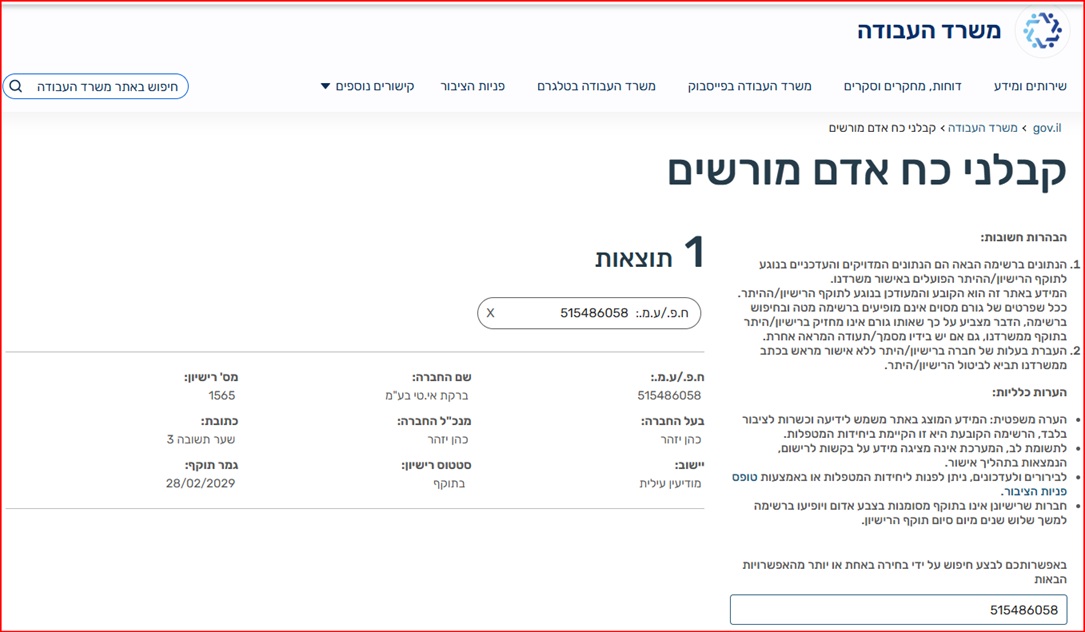
Reg. 515486058 · Licensed manpower contractor #1565 (valid to 28.02.2029)
Licensed private employment bureau #2435 (valid to 30.11.2027) · verify in the Ministry of Labor registry
Office: Sha'arei Teshuva 31, Modi'in Illit
Tel +972-8-976-1874 · neto@neto.work

Open →

Book a demo

Pick a convenient time · we'll confirm by phone/email

Choose a day
Choose a time (11:30–15:30)
A family unpacking boxes in a new apartment in Israel

Three ways to earn in Israel after aliyah

Find an Israeli job, keep the employer you already have, or work for clients abroad. Most people assume they have to pick the first one. They do not.

See the three routes
Manpower license 1565 Supervised by the Ministry of Labor Operating since 2016
AI Summary

There are three ways a new immigrant can earn a living in Israel, and they are not mutually exclusive. You can take a local job, you can keep working for the employer you already have abroad, or you can work for clients abroad as a freelancer. The second and third routes are the ones most olim do not realize are available, because they assume an employer abroad cannot keep someone living in Israel without opening a company here.

They can. NETO employs you in Israel, invoices your employer or client abroad, withholds Israeli income tax at source, contributes to pension and severance, and issues a full Israeli payslip. The fee is 5% of the invoice amount before VAT, paid out of the invoice, never charged to you. Below are the open roles on our English board, and what each route involves.

The three routes

Which one fits depends on one question: do you already have work, and where is the person who pays you based?

1

Take an Israeli job

The familiar route. You are hired by an Israeli employer, on an Israeli contract, with a payslip and the protections Israeli employment law gives salaried workers.

Our board lists open roles, with the employer’s salary where it was given or the CBS median marked as an estimate, and the application goes to the employer through us.

Best if you are starting fresh here, or want Hebrew-speaking workplace experience.
See open roles below →
2

Keep the employer you have

If someone abroad already employs you and wants to keep you, they do not need to open an Israeli entity, an Israeli bank account or a payroll department.

NETO becomes your employer in Israel and invoices them. Your role and reporting line normally stay as they are; what changes is the layer underneath.

Best if you are still abroad and planning the move. There is more room to settle the commercial terms before you fly.
How to arrange it →
3

Work for clients abroad

Several clients rather than one employer. You do not have to open an osek or take on the bookkeeping and reporting that come with being self-employed in Israel.

Invoices go out to your clients, and you are paid as a salaried employee with pension and severance accruing.

Best if your income comes from more than one source, or varies month to month.
How invoicing works →

Open roles, in English

Live listings, updated as employers post them. Roles show the employer’s salary where it was given, or the CBS median clearly marked as an estimate.

Posting a job is free for employers. Applying is free, always. Open the full board →
A note on language. Israeli employers almost always post in Hebrew, so the English board shows only the roles that have been translated · at the moment that is a small share of the whole. If you read any Hebrew, the main board carries far more. Either way, the application itself goes through us in English.

What NETO does

In routes 2 and 3, we are your legal employer in Israel. That means something specific, and it is worth being precise about it.

What you get: a full Israeli payslip, income tax withheld at source, pension and severance contributions under Israeli law, National Insurance contributions reported and paid through payroll, and the protections Israeli employment law gives salaried workers.
What it costs: 5% of the invoice amount before VAT. It is part of the invoice your employer or client pays, and it is never deducted from you. The rest of your payslip shows the standard statutory withholdings and contributions that apply to any salaried employee here.
What we will not promise. We handle the employment side. We do not give tax advice, and we will not tell you that this eliminates your obligations abroad. If you are a US citizen, the United States taxes worldwide income wherever you live, and your personal position depends on your own circumstances. Bring it to a professional who handles both tax systems. We would rather you hear that from us first.

Found this through All About Aliyah?

NETO and All About Aliyah work together to cover a gap most aliyah guides leave open: what happens to your income after you land. Michael Elbaz covers the move itself, the bureaucracy and finding a home. We cover the employment side.

“[ Michael's sentence goes here — in his own words, approved in writing before this page goes live ]”

Michael Elbaz · founder, All About Aliyah

Disclosure: NETO and All About Aliyah work together as referral partners. All About Aliyah may receive a commission if you start working with NETO through their recommendation. It does not change what you pay, and it does not change what we tell you.

Questions people actually ask

Do I have to choose one route?
No. People move between them, and some combine them. Someone can keep a part-time arrangement with an employer abroad while taking an Israeli job, or start with clients abroad and move to a local employer later. What matters is that each stream is handled properly rather than left informal.
Does my employer abroad have to open a company in Israel?
No. That is the specific problem this structure solves. NETO is the Israeli employer and your employer abroad simply pays an invoice, the same way they pay any other supplier. They do not register an entity, open an Israeli bank account, or run Israeli payroll.
Do I need to open an osek to work for clients abroad?
Not through this route. Invoices go out to your clients from NETO, and you are paid as a salaried employee with a payslip, pension and severance. The bookkeeping and periodic reporting that come with being self-employed in Israel do not fall on you.
How much does it cost, and who pays?
The fee is 5% of the invoice amount before VAT. It is part of the invoice your employer or client pays and is never deducted from the employee’s pay.
Why are there fewer roles on the English board?
Israeli employers usually post in Hebrew. The English board shows the roles that have been translated, so you never land on a listing you cannot read. The Hebrew board carries considerably more listings, and the application itself goes through us in English either way.
Is this regulated, and by whom?
Yes. Employing workers on behalf of others is a licensed activity in Israel. NETO holds manpower contractor license number 1565 and operates under the supervision of the Israeli Ministry of Labor. You can ask any provider for their license number, and it is worth doing.
I am still abroad. Is it too early to sort this out?
No · earlier is better. If you intend to keep an employer or clients abroad, arranging it while you are still there gives you time to work through the commercial terms, reduces the risk of a gap between your last foreign payment and your first Israeli one, and means your Israeli income is documented from the first month.
Disclaimer. This page provides general information about employment structures in Israel and does not constitute tax, legal or financial advice. It does not take your personal circumstances into account. Tax outcomes depend on individual facts, including the nature of the working relationship, residency status and applicable treaty provisions. Before making decisions, consult a qualified tax professional in the relevant jurisdictions and, where appropriate, a lawyer.

Not sure which route is yours?

Tell us where you are in the move and who is paying you, and we will tell you honestly which of the three fits you before you commit to anything.

Start now · free registration

If you came here from a partner site, they may receive a commission. It does not change what you pay.

About the author
Yizhar CohenYC
Yizhar CohenEntrepreneur · CEO and Founding Partner at NETO

I founded NETO to turn complex employment and payment processes into something simple, clear and legal for everyone. Good service starts with human understanding, combined with smart technology and personal attention.

Connect on LinkedIn
Have a question? Let's talk.
Topics