How to Become Self-Employed and Open a Business in IsraelAll the steps, the obligations · and the alternative that saves opening a file
Moving from salaried employment to self-employment is a significant step. Here you will find exactly what to do and in what order · choosing between osek patur and osek murshe, opening files at VAT, Income Tax and National Insurance · plus the NETO alternative: issue an invoice and get paid without opening a business file.
Already have an account? Log in
AI summary · how to become self-employedClick to read the page summary
To become self-employed in Israel you first choose a status · osek patur (turnover up to about 122,833 NIS a year, without charging VAT) or osek murshe (charges VAT and offsets expenses). Then you open files at three authorities · VAT, Income Tax and National Insurance · and start managing invoices and books lawfully. Not everyone needs to open a file: for occasional work, a one-off project or side income you can issue a tax invoice and get paid via a payslip through NETO · without opening a business file with the authorities, for a 5% fee on the invoice amount before VAT.
- Status · osek patur up to about 122,833 NIS a year · otherwise osek murshe.
- Three authorities · VAT, Income Tax and National Insurance.
- Bookkeeping · a legal obligation · an invoice for every income, backup for every expense.
- The NETO alternative · invoice and payment without opening a file · 5% fee before VAT.
- Employee and self-employed in parallel · a legitimate and common transition path.
- The information is general only · not tax advice · verify at the official source.
- Key points
- What to check before going self-employed
- Osek patur or osek murshe
- Comparison · patur vs murshe
- Steps to open a self-employed business
- The obligations · VAT, books and National Insurance
- The alternative · invoice through NETO
- Comparison · opening a file vs NETO
- Common mistakes and tax advances
- FAQ
- In summary
Key points
The wish to go self-employed accompanies many people · flexible hours, working from home or building something of your own. The move from employee to self-employed requires proper preparation, but it is achievable and worthwhile for those who prepare. Here is the essence before we dive in.
- The choice between osek patur and osek murshe affects reporting, pricing and the ability to offset expenses.
- Files are opened at three authorities · VAT, Income Tax and National Insurance.
- Orderly invoice management is a legal obligation and also a business management tool.
- You can combine salaried and self-employed work in parallel as a transition path.
- Tracking tax advances prevents surprises at the end of the year.
- For occasional work · an invoice through NETO saves opening a file altogether.
What you really need to check before going self-employed
Before handing in your notice or rushing to open files, it is worth pausing to examine a few basics. Is your line of work suited to self-employment? Are there potential clients, or at least a clear direction? Do you have a financial safety cushion for the first months?
Early planning saves a lot of headaches. It is recommended to prepare a basic business plan, even a simple one · what you will offer, to whom, and at what price. Defining a transition track of 60 to 90 days can help build a stable base before jumping in · and sometimes it is best to start as a combination of employee and self-employed in parallel.
Osek patur or osek murshe · how to choose right
One of the first and most important decisions is choosing your status with VAT. The difference affects reporting, pricing and the ability to offset expenses.
Osek patur
A self-employed person who does not charge clients VAT and does not offset VAT on expenses. Suitable for small businesses with an annual turnover of up to about 122,833 NIS (as of 2026).
Not every occupation may register as patur, even with low turnover · there is a list of professions that must be murshe.
Osek murshe
Must charge VAT and report periodically, but can offset VAT on business expenses. Suitable for those expecting a higher turnover or with many expenses that carry VAT.
Even below the ceiling · if most of your clients are businesses (which offset VAT anyway) or you have significant expenses, murshe is preferable.
When murshe is still better
If most of your clients are businesses, VAT does not make your service more expensive for them · they offset it. In addition, expenses like equipment, software and rent carry VAT · the offset saves real money.
Selling mostly to private clients without many expenses? Osek patur is simpler to manage and suits the beginning of the road.
Osek patur vs osek murshe
| Criterion | Osek patur | Osek murshe |
|---|---|---|
| Annual turnover ceiling | Up to about 122,833 NIS | No limit |
| Charging clients VAT | No | Yes (18%) |
| Offsetting VAT on expenses | No | Yes |
| Periodic VAT reporting | Once a year | Monthly or bi-monthly |
| Suitable for | Small businesses, beginner freelancers | Businesses with high expenses or business clients |
Want to dive into the process itself? Read the full guide to opening a business file, and if you are undecided · when an osek patur is actually not worthwhile.
Steps to open a self-employed business in Israel
The triangle every self-employed person must know includes three authorities · VAT, Income Tax and National Insurance. The recommended order starts with VAT, where the status is set. Prepare in advance · ID card, bank account details, a description of the activity, and if relevant · a lease agreement or professional license.
Suitability check and initial planning
Make sure the occupation suits self-employment · potential clients, pricing and a financial safety cushion for the first months.
Choosing a status · patur or murshe
Decide according to expected turnover, client type and the volume of expenses carrying VAT · this is the decision that shapes all your reporting.
Opening a file at VAT
Opening an osek patur is possible online through the Israel Tax Authority website · personal details, a description of the occupation and basic documents. For an osek murshe · Form 821 with additional documents such as a lease agreement or proof of ownership of the business premises.
Opening a file at Income Tax
Here the file is defined as self-employed and the tax advances for the year are set, based on the income estimate. Receiving a bookkeeping approval defines how to document income and expenses · an important part of the process.
Registering with National Insurance
As soon as work begins there is an obligation to notify the National Insurance Institute immediately. Registration preserves entitlement to benefits in case of a work injury, reserve duty and other situations. Update the estimated income for an accurate calculation of the advances.
Business bank account and invoicing system
Separate a business account from your private one, and set up a digital system for issuing invoices and tracking income and expenses · and finally, schedule a consultation with an accountant or tax advisor for the start of the road.
What you commit to as self-employed · VAT, books and National Insurance
Being self-employed also means three ongoing obligations worth knowing in advance · VAT reporting, proper bookkeeping, and National Insurance and health insurance contributions.
VAT
An osek murshe charges VAT (18%) and reports monthly or bi-monthly · and can offset input VAT on expenses. An osek patur does not charge VAT and files an annual declaration only.
Bookkeeping and invoices
Every income is documented with an invoice or receipt, and every business expense requires backup. From 2024, transactions above a certain ceiling require an allocation number for the tax invoice under the Israel Invoices framework · and the ceilings are expected to drop over time.
National Insurance and health
Insurance contributions are calculated by income brackets · there is a minimum income for liability, above which the rate rises gradually. Health insurance contributions are paid in addition. Working as an employee too · pay attention to the combined calculation.
National Insurance rates for the self-employed (2026)
| Income bracket | National Insurance rate | Health insurance rate |
|---|---|---|
| Up to 7,703 NIS per month | Reduced · 4.47% | 3.23% |
| Above 7,703 and up to 51,910 NIS per month | Full · 12.83% | 5.17% |
Source: National Insurance Institute, in force from 01.01.2026. The maximum monthly income subject to contributions is 51,910 NIS · rates and thresholds are updated every year.
Digital platforms like NETO let you issue invoices in a click, track payments and keep all documents in one place · no spreadsheets and no mess. More on the tax aspects · taxes for freelancers.
Not sure you should open a file? Issue an invoice through NETO
Opening a business file suits steady, ongoing activity. But for occasional work, a one-off project or side income alongside salaried employment · opening a file with the authorities (with the reporting, advances and costs that come with it) can be too heavy. This is where NETO comes in.
Opening a self-employed business
Full control over the business · but with ongoing responsibility.
- Opening files at three authorities · VAT, Income Tax and National Insurance.
- Periodic reporting, tax advances and bookkeeping are your responsibility.
- National Insurance contributions as self-employed · by income brackets.
An invoice without opening a file
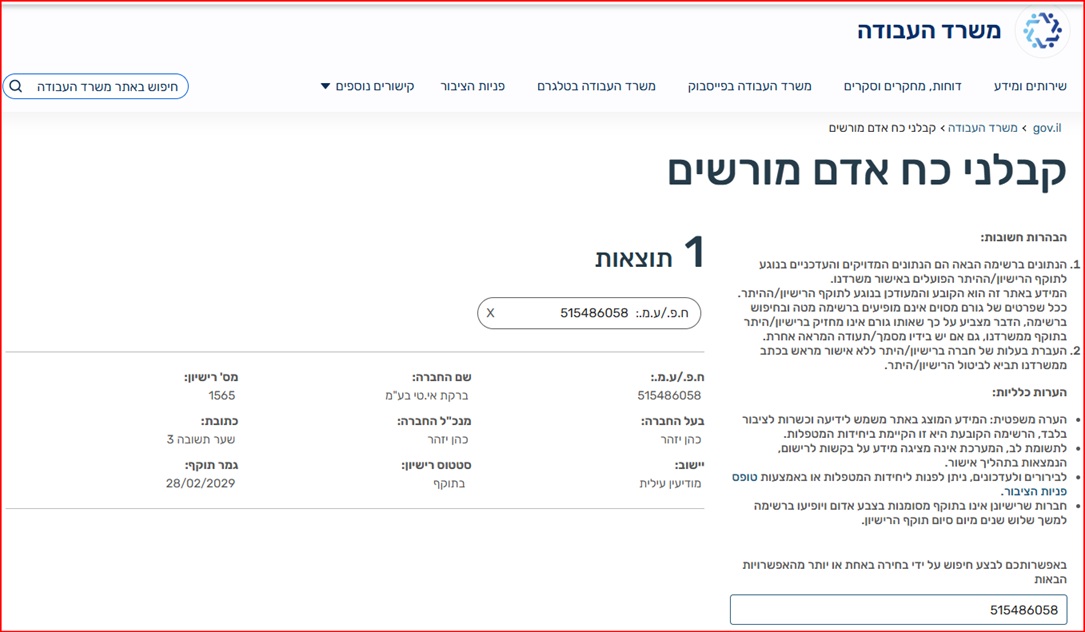
NETO is a licensed manpower contractor (license 1565) that issues a lawful tax invoice for you.
- Issuing a tax invoice to the client · without opening a business file with the authorities.
- The payment reaches you via a payslip · deductions and National Insurance are handled.
- A 5% fee on the invoice amount (before VAT) · no fixed costs.
Want to go deeper? Read how to work as a freelancer without opening a business file, when it is better to issue an invoice through a service vs opening a business, and what the alternatives to opening an osek murshe are.
Opening a business file vs an invoice through NETO
| Criterion | Opening a self-employed business | Invoice through NETO |
|---|---|---|
| Opening files with the authorities | Required · three authorities | Not required |
| Periodic reporting and advances | Your responsibility | NETO handles it |
| Bookkeeping and invoicing | Your responsibility | Included in the service |
| National Insurance | As self-employed · by brackets | Deducted in the payslip as an employee |
| Suitable for | Steady activity with recognized expenses | Occasional work, a project or side income |
| Cost | Accountant fees and management time | 5% fee on the invoice (before VAT) |
Common mistakes · and tax advances
Mixing private and business
The most common mistake. When everything is mixed it is hard to track profitability and hard to prove expenses to the authorities. A separate business bank account, or at least a clear separation, saves trouble.
No ongoing tracking
Many self-employed people discover at the end of the year that they owe much more tax than expected, simply because they did not track. A simple monthly routine of summarizing income and expenses prevents surprises.
Late reporting
Fines for delays accumulate fast and hurt profitability. A system that reminds you of deadlines and generates reports automatically · like NETO · can save real money.
Tax advances · why is tracking important? Advances are ongoing payments on account of the annual tax · both at Income Tax and at National Insurance you pay during the year based on an estimate, and at its end a final calculation is made. If income is higher than expected · you will need to top up, and if lower · you will get a refund. Monthly tracking and updating the advances when needed prevent a surprise debt.
Employee and self-employed in parallel. This is a recommended transition path · many build the business while still employed, and move to full self-employment once there is a stable client base. Income from both sources is calculated together for Income Tax purposes, and there may be differences in the tax coordination at the end of the year. When the business demands more time, or there is a conflict of interest with the employer · that is the time to consider a full move. Read more · freelancer or employee and freelancer or self-employed.
Checklist · the steps to opening a self-employed business
| Step | Action | Notes |
|---|---|---|
| 1 | Suitability check and initial planning | Potential clients, pricing, safety cushion |
| 2 | Choosing a status (patur/murshe) | By expected turnover and client type |
| 3 | Opening a file at VAT | Online or at the offices |
| 4 | Opening a file at Income Tax | Receiving a bookkeeping approval |
| 5 | Registering with National Insurance | Immediately when activity starts |
| 6 | Opening a business bank account | Separation from the private account |
| 7 | Setting up an invoicing system | Manual or digital |
| 8 | Consultation with an accountant/tax advisor | At least once at the start |
Watch · how to start invoicing without a business file
A short video showing exactly how it works · from signing up to the payslip, before you commit.
How to become self-employed · questions and answers
How much does it cost to open an osek patur?
Opening an osek patur file with the authorities is free of charge. The costs begin when you need to pay tax advances and National Insurance, and they depend on income. If you work with an accountant, there is an annual fee for the service.
Can I work as self-employed without opening a business file?
Yes. Through a service like NETO you can issue a lawful tax invoice and get paid via a payslip, without opening a business file with the authorities. It is especially suitable for occasional work, a one-off project or side income alongside salaried employment. NETO charges a 5% fee on the invoice amount before VAT.
What happens if I did not report income?
Failing to report income is an offense that can lead to fines and even proceedings in serious cases. If you forgot to report or made a mistake, approach the authorities as soon as possible and settle the matter. The earlier you act, the easier it is to resolve.
When should I move from osek patur to osek murshe?
If your turnover is approaching the ceiling, or if the ability to offset VAT on expenses would save you money · it is time to consider the move. A shift in the nature of your clients (more business, fewer private) can also justify it.
Do I need a business license to be self-employed?
Not every occupation requires a business license. It depends on the type of activity and the location. Certain occupations such as food, health or working from home in an apartment may require a license. Check with the local authority.
Can I be both an employee and self-employed at the same time?
Absolutely, and it is even a recommended transition path. You can build a business while still working as an employee, and move to full self-employment once you have a stable client base. Income from both sources is calculated together for Income Tax and National Insurance purposes.
Can I go back to being an employee after being self-employed?
Absolutely. Moving between statuses is possible at any time · you close the files with the authorities as self-employed and start working as an employee. There is no legal barrier, you just need to make sure everything is closed properly.
Can I work as self-employed without an accountant?
Yes, there is no legal obligation to work with an accountant. That said, professional guidance can save mistakes and money in the long run. At the start, at least one consultation meeting can point you in the right direction.
In summary
The move to self-employment is a significant step that requires preparation, but it is achievable and worthwhile for those who prepare properly. You choose a status (osek patur or murshe), open files at VAT, Income Tax and National Insurance, and manage invoices and books lawfully. And for those who want to start small · an invoice through NETO saves opening a file altogether, for a 5% fee on the invoice amount before VAT. NETO is an automated employment system, a manpower contractor under license 1565, operating since 2016.
- Status · osek patur up to about 122,833 NIS a year, otherwise murshe.
- Three authorities · VAT, Income Tax and National Insurance.
- Ongoing obligations · reporting, bookkeeping and tax advances.
- The NETO alternative · invoice and payment without opening a file · 5% before VAT.
Articles you may find interesting
The road to self-employment · simpler with NETO
Sign up free and start issuing invoices and getting paid today · without opening a file. Have a question? Talk to us on WhatsApp.
Phone support · 08-9761874